
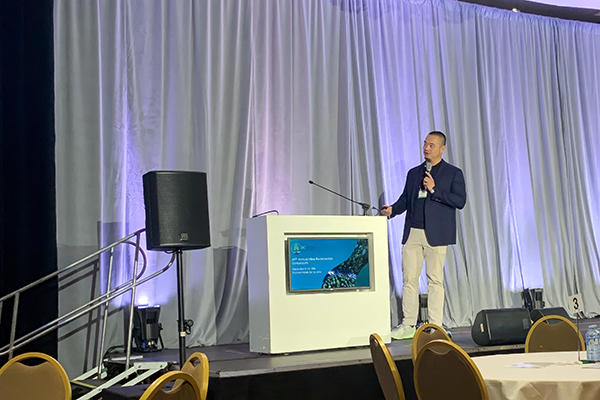
Knight Piésold Canada Presents Climate Change Workflow for Mine Water Management at BC Mine Reclamation Symposium
October 6, 2026, Vancouver, BC, Canada – Knight Piésold Canada presented a workflow that aligns recent climate-adaptation requirements for engineering design with closure planning at the 49th Annual BC Mine Reclamation Symposium, held September 21–24, 2026, in Fort St. John, BC.
Organized by the British Columbia Technical and Research Committee on Reclamation (BC TRCR), the symposium brought together more than 250 biologists, engineers, mine operators, First Nations community members, and students. The program featured 20 presentations on work at mine sites and a video tour of a metallurgical coal operation.
Knight Piésold’s Nick Rong, Project Scientist; Jaime Cathcart, Specialist Hydrotechnical Engineer; and Greg Smyth, Project Manager, attended the symposium and co-authored the paper “Climate Change Considerations in Mine Water Management and Engineering Design for Reclamation Planning.” Rong and Cathcart presented the paper in Technical Session 12.
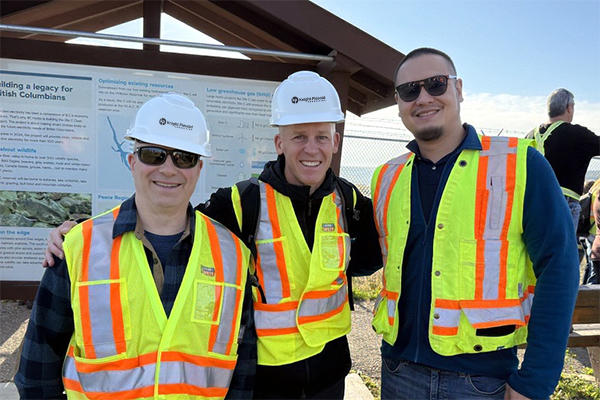
The presentation addressed a gap in current practice. Recent provincial guidance has extended climate-adaptation expectations to mine reclamation but has so far emphasized the ecological side of post-mining landscapes, while engineering practice guidelines address climate adaptation but are not specific to reclamation.
To close that gap, the presenters outlined a single workflow connecting climate science, hydrologic modelling, and reclamation design. It covers regulatory drivers, historical climate characterization, future climate projection, generation of a future-baseline streamflow series, and propagation of climate signals through the downstream model chain. A central concept is the future baseline, a climate-change-affected streamflow series free of mine-induced alterations, that serves as the benchmark for evaluating post-closure designs.
Examples from Knight Piésold’s analyses of mining projects in BC, the Yukon, and South America illustrated typical climate-change signals at mine closure: earlier freshet, bi-modal hydrologic regimes, higher winter baseflow, and a shift in governing design events from snowmelt volume to rainfall intensity. By addressing the water-cycle foundation on which post-mining landscape outcomes depend, the work complements ecology-focused reclamation guidance.
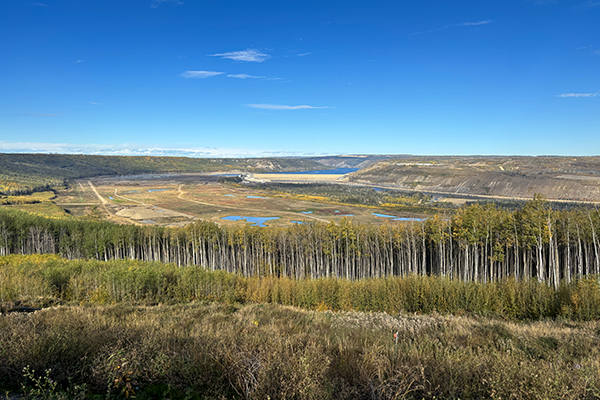
The symposium opened with a field visit to the John Horgan Dam (formerly the 1,230 MW Site C Clean Energy Project), joined by 90 participants, including the Knight Piésold team. Knight Piésold has been involved with the project since 2011, from sediment transport studies for the Owner, BC Hydro, before construction to lead design of all temporary civil works for the Main Civil Works Contractor, Peace River Hydro Partners, including environmental support, site-wide water management and erosion control planning, and on-site construction monitoring. In 2026, the company received an Award of Excellence for its work on the project at the ACEC-BC Awards for Engineering Excellence.
The presenters emphasized that assessing potential climate change effects is now a core input to water resources characterization and engineering design. Knight Piésold is applying the workflow to give clients a defensible basis for closure designs that meet regulatory and professional expectations in place in BC, across Canada, and internationally. Used alongside ecology-focused reclamation frameworks, the workflow supports reclamation landscape development that remain fit for purpose through the end of the 21st century.
Knight Piésold supported the symposium as a Zinc Sponsor and is committed to continuing to work with the BC TRCR community, clients, regulators, and First Nations to advance research, best practices, and emerging approaches in mine reclamation.