
From GeoStable Tailings to Dam Breach Analysis: Knight Piésold at Tailings and Mine Waste 2026
November 25, 2026, Denver, CO, USA – Four Knight Piésold geotechnical engineers delivered technical presentations at the Tailings and Mine Waste 2026 conference, held November 8–11 in Westminster, Colorado. The presentations covered a laboratory mixing study of GeoStable Tailings, a framework for interpreting partially drained CPTu responses in mine tailings, practical approaches for Responsible Tailings Facility Engineers (RTFEs), and estimating the shear strength of waste rock support fill. A Knight Piésold hydrotechnical engineer was also among the instructors of the Canadian Dam Association (CDA) short course on Tailings Dam Breach Analysis (TDBA).
The conference was organized by the Civil & Environmental Engineering Department of Colorado State University and C3 Alliance as an industry-academia partnership for sharing knowledge and advancing the state of practice in tailings and mine waste management. It opened with a day of workshops and short courses, followed by three days of 135 oral presentations in three parallel sessions, alongside a new Digital Poster Room. Presenters included mine owners and operators, consultants, regulators, technology providers, and university researchers and students.
Technical Program and Short Course
Laboratory Mixing Study of GeoStable Tailings
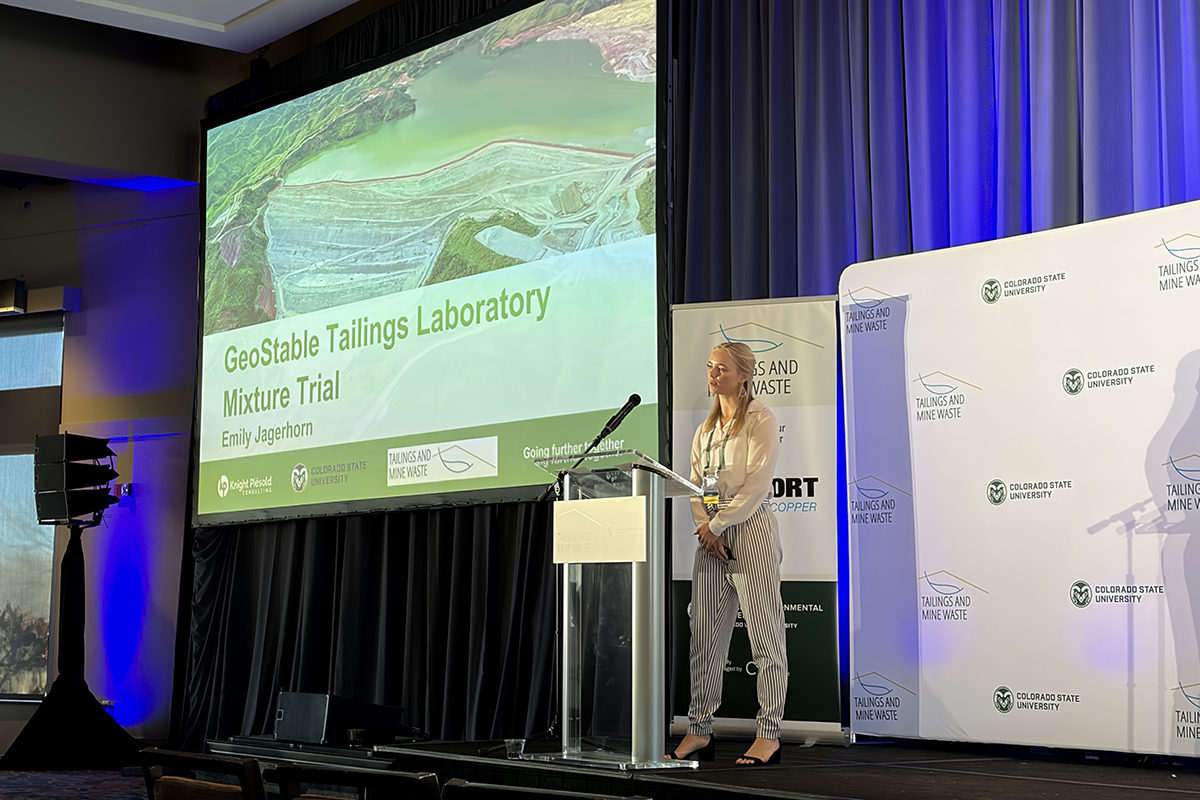
Emily Jagerhorn, Geotechnical Engineer at Knight Piésold USA, presented “GeoStable Tailings Laboratory Mixture Trial” in Technical Session 1.1A. The paper was co-authored with Christopher Bareither and Joseph Scalia of Colorado State University. GeoStable Tailings are homogeneous mixtures of tailings and waste rock being investigated as a way to improve storage efficiency and support long-term environmental and closure goals.
Jagerhorn described a laboratory mixing study that used whole tailings and cycloned underflow tailings mixed with waste rock to evaluate the influence of tailings type, solids content, mixture ratio, and placement energy on the engineering behavior of GeoStable Tailings. The results provide insight into the range of mixture conditions suitable for field-scale evaluation and support the continued development of laboratory-based screening methods.
Framework for Interpreting Partially Drained CPTu Responses in Mine Tailings
Renzo Cornejo, Geotechnical Engineer at Knight Piésold USA, presented “A Framework for Interpreting Variable Penetration Rate CPTu Tests in Mine Tailings” in Technical Session 1.2B. The paper was co-authored with lead author Jorge Macedo of Georgia Institute of Technology. Cone penetration testing with pore pressure measurements (CPTu) is widely used in tailings engineering, but interpreting results when penetration occurs under partially drained conditions remains challenging.
Cornejo demonstrated the application of a framework to variable-penetration-rate CPTu tests performed at 0.2, 2, 10, and 15 cm/s in a tailings storage facility (TSF) containing both conventional and thickened tailings. The framework provides a systematic basis for evaluating variable-rate CPTu tests in mine tailings and for reducing uncertainty in parameters used in engineering assessments.
Practical Approaches for RTFEs
Eric Bates, Senior Geotechnical Engineer at Knight Piésold USA, presented “RTFE Lessons Learned from a TSF Buttressing Project” in Technical Session 1.3C. Drawing on his experience as an RTFE, Bates described a case history of a TSF buttressing project at an operating mine site, in which a technically justified stabilization measure was delayed by interacting project dependencies and shifting perceptions of urgency.
The case illustrated how risk-reduction measures can stall after approval and how adapting communication formats to the context and audience can help overcome obstacles to success. He then outlined practical approaches for RTFEs and other tailings practitioners who develop, review, and communicate recommendations to support the timely execution of risk-reduction work within mine site decision pathways, governance expectations, and day-to-day execution realities.
Estimating Shear Strength of Waste Rock Support Fill
Miguel Regalado, Senior Geotechnical Engineer at Knight Piésold UK, presented “Shear Strength Assessment of Run‑of‑Mine Waste Rock Used as Support Fill at the Aitik Mine Through Empirical Approaches” in Technical Session 2.2C. The paper was co-authored with Tom Shire and Mahmoud Elbanna of Klohn Crippen Berger and Romain Girard of Boliden Mineral AB.
Regalado described a workflow for estimating the shear strength of waste rock support fill at the Aitik copper mine’s tailings management facility in northern Sweden, in the absence of large-scale shear strength laboratory testing. The workflow combines digital image analysis, sieve analysis, unit weight determination, and particle strength testing to derive the input parameters for four empirical methods (Leps, Barton and Kjærnsli, Douglas, and Leps 2.0).
CDA Short Course on Tailings Dam Breach Analysis
Daniel Adria, Project Engineer at Knight Piésold Canada, joined the CDA TDBA Working Group to present at the “CDA Short Course on Tailings Dam Breach Analysis.”
The CDA developed the course after publishing its 2021 technical bulletin on TDBA, to promote the science of TDBA and build awareness of the risk of tailings dam failure. It was the first time the course was offered to dam professionals in the USA. It had been previously presented in Canada (in English and French) and internationally (Brazil, Peru, Portugal, India, and Namibia).
Adria presented on the methods used to model the failure of a tailings facility, which supports better emergency planning and management for mines. He is an active member of the working group and the CDA Young Professionals Committee.
Additional Contributions to the Proceedings
Knight Piésold staff also contributed to two other papers in the conference proceedings, which contain nearly 200 peer-reviewed papers across seven technical tracks.
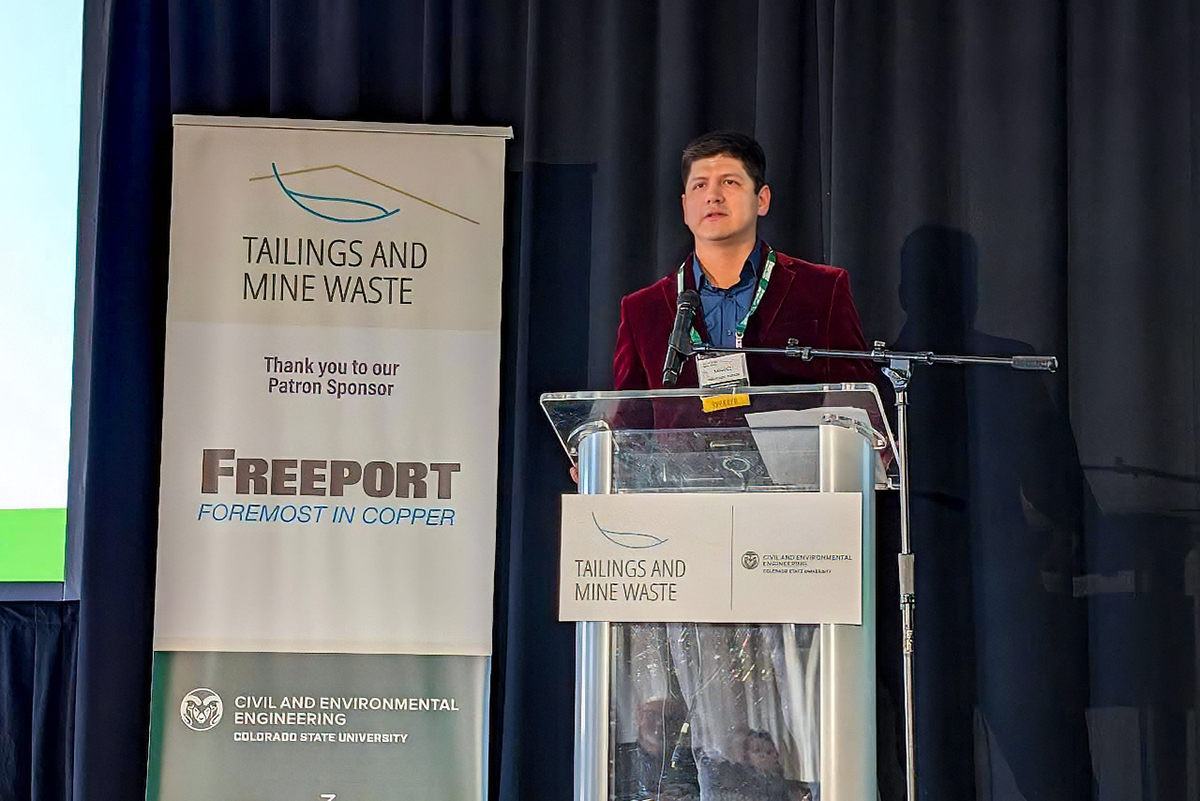
- Miguel Regalado was one of three authors of “Comparison of Remeshing and Material Point Method Approaches for Large-Strain Assessment of a Tailings Storage Facility Under Residual Undrained Strength Conditions.” Lead author Myzael Valdivia of Klohn Crippen Berger presented it in Technical Session 2.3A.
- Ledson Sathler, Geologist at Knight Piésold Brazil, was one of six authors of “Characterization of a Tailings Dam Foundation in Dolomitic Rock and Soft Soils and Proposed Treatment with Stone Columns Filled with Cement Grout.” Lead author Samuel Loures of Walm Engenharia presented it in Poster Session P2.2.
Additional Conference Presence
Knight Piésold staff served on conference committees:
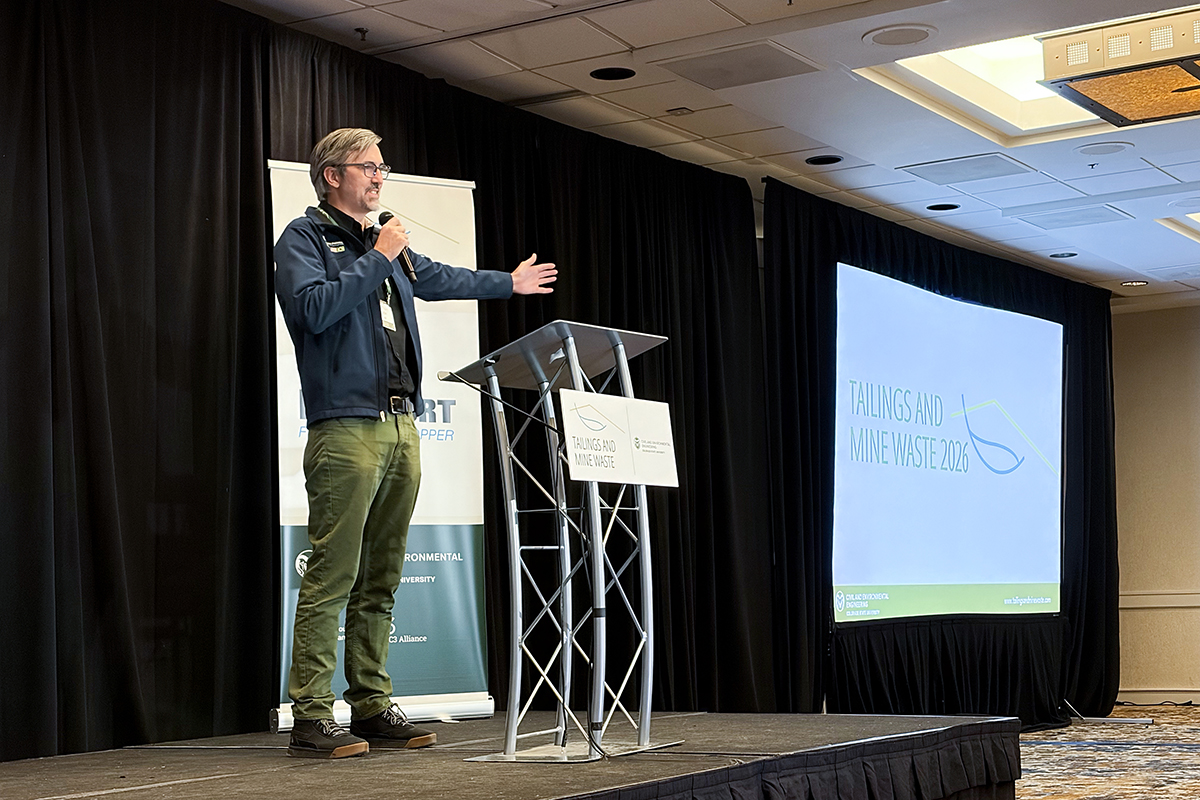
- Organizing Committee: Zach Fox of Knight Piésold USA
- Technical Review Committee: Eric Bates, Zach Fox, Mrunmay Junagade, and Nicholas Sianta of Knight Piésold USA; Andressa Silva of Knight Piésold Brazil; and Daniel Adria of Knight Piésold Canada
In addition to the presenters, the following staff attended the conference to meet clients and industry colleagues:
- Jeff Coffin, Paul Ridlen, Jason Taylor, Jake Maybach, Zach Fox, and Stefan Pauley of Knight Piésold USA
- Gustavo Vianna and Octavio Vilas of Knight Piésold Brazil
- Ken Embree, Wilson Muir, Jim Fogarty, and Ricky Lawrence of Knight Piésold Canada
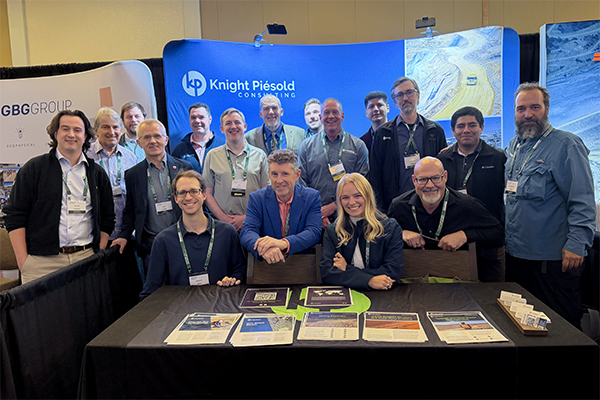
Knight Piésold also supported the conference as a gold sponsor and exhibitor. Colleagues from the USA, Brazil, Canada, and the UK took part as one team that reflect the company’s core values of unity and excellence. These values drive Knight Piésold’s work with clients and the industry to advance the tailings and mine waste field, supporting safer, more responsible mining operations worldwide. Knight Piésold looks forward to next year’s conference, November 7–10, 2027, in Vancouver, BC.